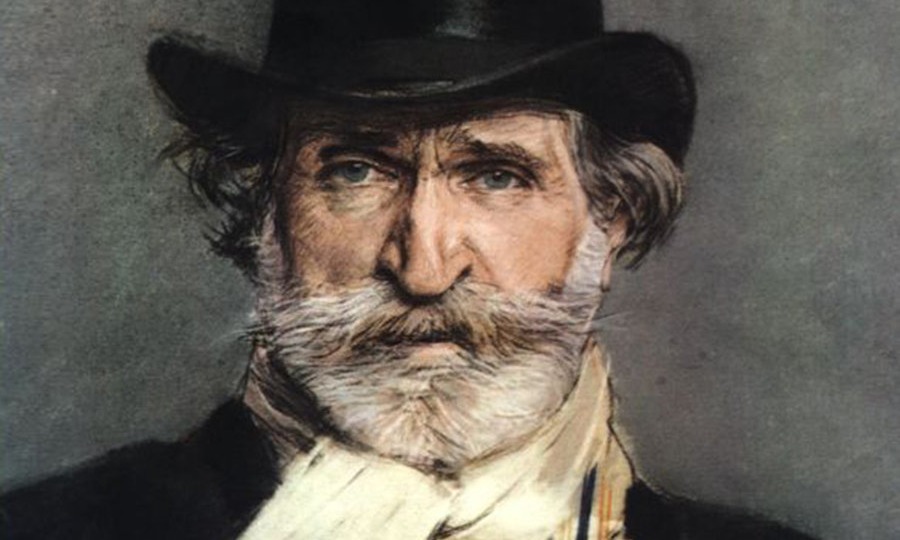
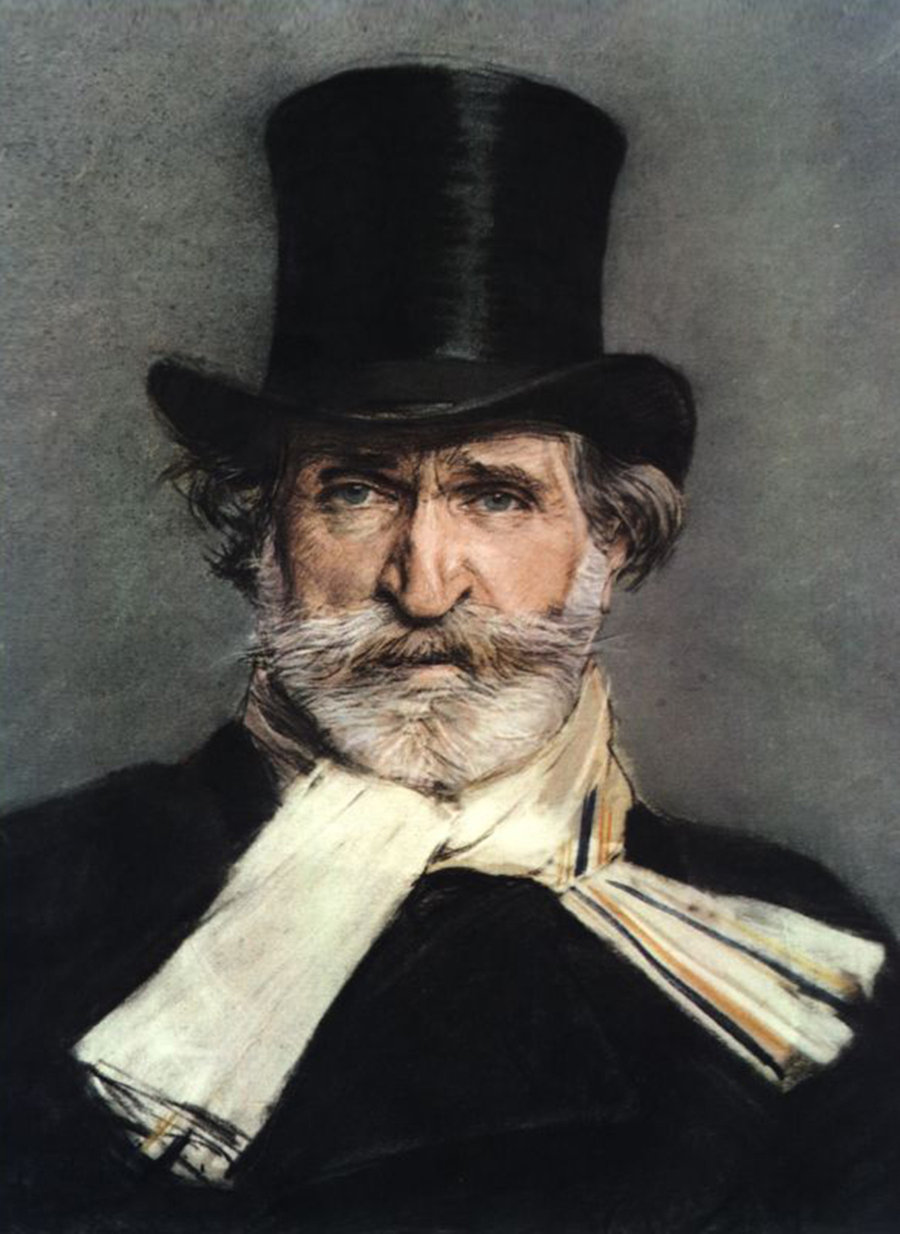
Giuseppe Verdi
Born in 1813 near Parma into modest circumstances, Giuseppe Verdi was only able to study music thanks to the support of a sponsor. The local merchant Antonio Barezzi recognized his talent and, in 1832, sent the not-yet-twenty-year-old to Milan — then the center of Italian musical life. The investment proved worthwhile: Verdi studied with great success, became Maestro di Musica (music director) in Busseto in 1836, and married Margherita, Barezzi’s daughter.
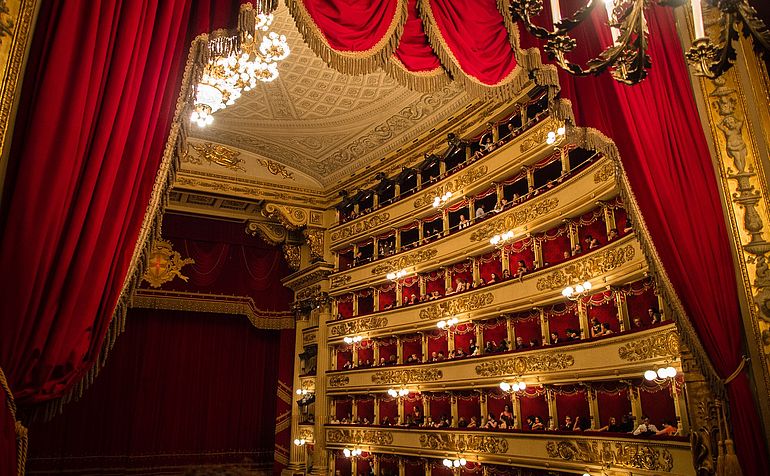
Thanks to the connections he had made during his student years, Verdi was soon asked to compose an opera for a small theater. He spent three years working on Oberto, conte di San Bonifacio, which premiered at La Scala in 1839. While not a great triumph, it earned him recognition, and the director of La Scala, Bartolomeo Merelli, commissioned further operas.
Things seemed to be going well — Verdi and Margherita now had a son and a daughter — and he dutifully began work on his next opera, Un Giorno di Regno, a comic piece. But in April 1840, tragedy struck: his young son suddenly fell ill and died, followed shortly by his daughter. Then, on June 19, Verdi’s wife Margherita also passed away from a severe case of meningitis. In the span of just a few weeks, Verdi had lost his entire family.
Despite this unimaginable grief, he was still obligated to complete Un Giorno di Regno. Its premiere was a complete failure. Devastated, Verdi declared he would never compose again.
Upcoming Performances


.jpg)
The schedule for the following season will be released soon. Stay tuned!
Stay informed on the latest news and events! Subscribe to our Newsletter.
Das könnte Sie auch interessieren
.jpg)
%20(1).jpg)
%20(1).jpg)
%20(1).jpg)
.jpg)


.jpg)
%20(1).jpg)
.jpg)
%20(1).jpg)
.jpg)
.jpg)
%20(1).jpg)
%20(1).jpg)
.jpg)
.jpg)
